The types of garage doors vary by material, style, and how they open. Steel, wood, aluminum, and composite each bring different looks and care needs. The right choice for a Duncan property depends on its design, local weather, daily use, and the upkeep you can manage.
Choosing a new garage door is an important decision for a home or business. It affects the look of the building and how people use the garage. Knowing how the main materials compare can make the choice clearer. Duncan Garage Door Repair can help explain how different door styles and materials may suit your property.
Table of Contents
- What are the main types of garage doors?
- What should you know about steel garage doors?
- Are wood garage doors a good choice?
- When does an aluminum garage door make sense?
- How do composite garage doors compare with other materials?
- Which garage door style and material fit your property?
- How can you choose the right garage door for long-term use?
What are the main types of garage doors?
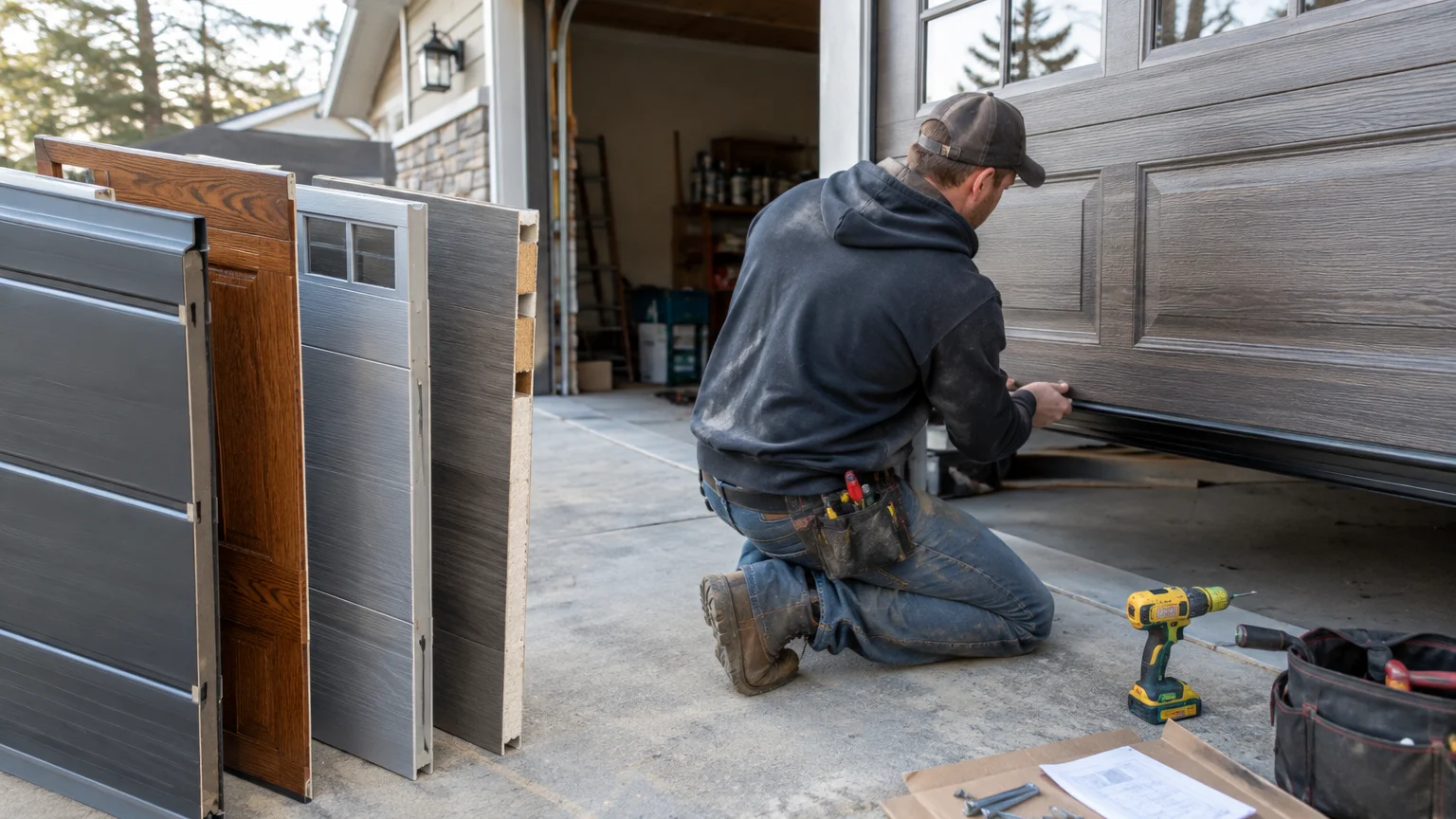
The main garage door materials are steel, wood, aluminum, and composite. A door’s style means its look, while its material is what it is made from. Doors can also have windows, raised panels, or a smooth surface. These choices affect how the door looks and how you care for it.
How door materials differ from door styles
A garage door can have a traditional, modern, or carriage-house style. These designs can be made from different materials. For example, a steel door can have raised panels that look like wood. A wood door can also have a plain, modern look.
The way a door opens is another choice. Many homes have sectional doors, which use hinged panels that move along tracks. Other designs may suit a property better, based on the opening and the space around it. The best setup depends on the building and how people will use the door.
Why material choice affects appearance, upkeep, and performance
Material affects a door’s weight, surface, care needs, and response to weather. Insulation is another feature to consider. Insulation is material inside the door that slows heat from passing through. It may help a garage attached to a home feel more comfortable, but the whole building matters too.
Think about how often the door will open and what you keep in the garage. Consider how much care you can take on as well. The door must fit the opening, which can vary from one property to another. A trained installer can check the space and explain which options fit. In Duncan, local weather and the building’s design can help guide your choice.
What should you know about steel garage doors?
Steel garage doors are a common choice because they have a strong surface and come in many designs. They can work for homes and business properties. When comparing models, consider the door’s weight, insulation, finish, and chance of damage. Not every steel door is built the same way.
Durability, insulation, and design options
Steel doors come with different panel designs and finishes. Some have insulation between steel panels, while others have a simpler build. Read the product details to compare how each door is made. This helps you choose based on the door itself, rather than assuming every steel model works alike.
A steel door can have a classic raised-panel look or a smooth, modern design. Windows can bring daylight into the garage and change the look of the front of a building. Think about privacy and what room is behind the door before choosing window placement. These details can help a best garage door choice suit both the building and its use.
Maintenance needs and potential drawbacks
Steel does not need the same regular care as natural wood, but it still needs attention. Look for dents, worn paint, loose parts, or signs of rust. Clean the surface gently and follow the maker’s advice for its finish. Routine checks can help you notice changes before they affect daily use.
A dent may harm the door’s look, and other damage may need repair. If the door stops moving smoothly, do not force it. Keep people away and arrange a check, especially if panels look uneven or the door leaves its track. Springs and lift cables are under strong tension. Work on these parts is not safe to do yourself; it needs proper tools and training.
Are wood garage doors a good choice?
Wood garage doors can suit owners who want a natural look and custom details. They can fit many home styles, but they need regular care. Weather, door weight, and the way the door is built all matter. Think about these points before deciding if wood suits your property.
Natural appearance and customization
Wood has a natural grain and feel that other materials may not match. It can be made with different panels and finishes. This gives you ways to match the garage door with trim, siding, or other parts of your home. A well-matched design can help the whole building feel more joined together.
The finish affects both the look and the care plan. Ask what cleaning, sealing, or repainting may be needed. Sealing means adding a layer that helps protect the wood from moisture. A clear care plan helps you know what to watch for as the door faces sun, rain, and changing temperatures.
Weather exposure, upkeep, and weight
Wood can change when exposed to moisture and weather. Without suitable care, it may swell, crack, or change shape. This can affect how the door opens and closes. Follow the maker’s care advice and look for changes in the surface or fit.
Wood doors may weigh more than some other choices. The hardware and opener must suit the door’s weight. Do not guess about springs or cables when installing a new door. A trained garage door professional should check these parts and do any work on them. You can safely clean the door’s surface and watch for visible damage.
When does an aluminum garage door make sense?
An aluminum garage door can suit a property where a lighter door or modern look matters. Its fit depends on its design, finish, insulation, and daily use. Consider its appearance alongside the chance of dents and the needs of the space. The material name alone does not tell you how the full door will perform.
Lightweight construction and contemporary styles
Aluminum is often used for doors with wide glass panels or a simple, modern design. Its lighter build can suit doors that aim to bring more daylight into a garage. Think about how much the windows let people see inside. Make sure that level of visibility suits the room and property.
The door still needs to fit the opening and its operating system. Window size, panel layout, and the way the door moves can affect daily use. An installer can check the opening and explain which designs work for the building. This is useful when the garage has limited space or an unusual shape.
Denting, corrosion, and insulation considerations
Aluminum can dent if something strikes it. Think about activity near the garage, such as vehicles, tools, or play areas. A finish can also wear over time, so ask the maker how to care for the surface. Regular checks can help you spot damage early.
Some aluminum doors have insulated sections, while others are made to be thinner and lighter. Check the product details if the garage is attached to your home or used as a work area. Insulation may help with comfort, but it does not replace good airflow or care for the room. Compare the full door design instead of choosing by material alone.
How do composite garage doors compare with other materials?
Composite garage doors use more than one material in their build. Their look and performance depend on the materials used and how the door is made. They can offer a different mix of appearance, care, and weather resistance than solid wood or metal. Compare the exact product details before deciding.
Appearance and resistance to moisture or rot
Some composite doors are made to look like wood. They may suit owners who want a wood-like appearance but have concerns about moisture or rot. Composite is a broad term, though. It does not mean every door needs no care or will suit every kind of weather.
Check the maker’s details for the door’s surface, finish, and care needs. Ask how the material may respond to sun, rain, and changes in temperature. A sample or finish guide can help you see how its color and texture may look beside your building. These details matter when you want the door to fit the rest of the property.
Construction differences and practical trade-offs
Composite doors can vary in weight, insulation, and panel design. Some may have a frame, outer layers, or a core made from different materials. The way each door is built affects how it feels and what care it may need. Ask for details about the model you are considering.
Compare the full product, not just the word composite. Ask about its weight, finish, windows, and hardware needs. Find out whether panels can be replaced if one part gets damaged. With any material, a poor fit may stop the door from moving or sealing as intended. Correct sizing and installation help the door work safely.
Which garage door style and material fit your property?
The right garage door suits the property, local weather, daily use, and care needs. Start with the opening and the building’s style, then compare materials and features. The door should look right, move safely, and fit the way people use the garage. A practical choice can also make future care easier to manage.
Matching the door to the home or building
Look at the outside of your home, including trim, siding, windows, and the entry door. A traditional home may suit raised panels or a wood-like finish. A modern building may suit smooth panels, a simple shape, or larger windows. These ideas can help you start, but they are not strict rules.
For a business property, think about how often the door opens and what moves through it. The door needs to fit the opening and the work done inside. Also consider who will use it and whether windows or insulation would help. A door used often may need different features from one that opens only now and then.
Considering climate, use, maintenance, and windows
Local weather can affect the finish and care a door needs. In Duncan, consider sun, rain, and cold weather when comparing materials. Also think about whether the garage shares a wall with living space, stores items that need a steady setting, or serves as a work area. These details can help narrow your choices.
Windows can add daylight, but they also affect privacy and the door’s look. Insulation may help some garages, though it is not needed for every use. Write down your main needs before choosing: appearance, durability, upkeep, light, and daily use. Duncan Garage Door Repair can help property owners review options that fit the opening and the building.
How can you choose the right garage door for long-term use?
A good long-term choice starts with clear needs and a safe fit. Compare materials, styles, insulation, windows, and care instructions. Ask an installer to check the opening and explain how the door works with its tracks, springs, and opener. These parts all need to suit the door.
Questions to ask before selecting a replacement
Ask what the door is made from and how to care for its finish. Find out whether it has insulation, what the windows offer, and how its weight affects the door system. Make sure the door suits the opening and the way people use the garage. A garage door seal, which helps close the gap around a door, is another detail to ask about.
A damaged panel may sometimes be repaired or replaced. This depends on the door design, the damage, and whether a matching panel is available. A damaged panel can also point to a larger problem with safe movement. Do not try to remove or replace a panel while the door is under spring tension. A professional can check the damage and say whether repair or full replacement is safer.
Key takeaways
- Steel offers many designs, but dents and surface damage still need care.
- Wood has a natural look and usually needs regular upkeep.
- Aluminum can suit modern styles, though it may dent.
- Composite doors vary, so check the exact product and materials.
- Correct sizing, safe hardware, and proper installation matter for every door.
Frequently Asked Questions
What are the most common garage door materials?
Steel, wood, aluminum, and composite are common garage door materials. Each has its own look, features, and care needs. The right choice depends on the property, local weather, daily use, and how much upkeep you want to manage. Check the maker’s details before you choose.
How wide are standard two-car garage doors?
Two-car garage openings can vary, so one width will not fit every property. Measure the opening and check for nearby walls, ceilings, and tracks. An installer can confirm which door size and design fit the space safely. This helps avoid choosing a door that does not suit the building.
Can a damaged garage door panel be repaired?
Sometimes a damaged panel can be repaired or replaced. It depends on the damage, the door’s design, and whether a matching panel is available. Have a professional check the door first, since panel damage can affect how it moves and stays balanced. Do not try to repair parts under spring tension yourself.
Are garage doors with windows a good choice?
Windows can bring daylight into a garage and change the door’s appearance. They may not suit every space, especially when privacy matters. Think about where the windows face, what people can see from outside, and whether the garage needs more natural light. The right choice depends on how you use the space.
Which garage door material needs the least upkeep?
Care needs depend on the door’s finish, construction, and exposure to weather. Steel and aluminum do not need the same care as natural wood, but every door needs cleaning and checks. Follow the maker’s care advice and watch for damage or changes in how the door moves. A well-kept door is easier to use safely.
Conclusion
Choosing among the types of garage doors is easier when you compare your needs, not just the look. Consider material, style, weather, insulation, windows, and upkeep. A correct fit and safe installation matter as much as appearance. To discuss options for your property, Contact us today at Duncan Garage Door Repair and get help choosing a suitable door.
If you are not sure what you are dealing with, it is worth having someone look at it before it turns into a bigger job. Get in touch with Duncan Garage Door Repair today and we will tell you where you stand.